FREE PLAYBOOK | INNOVUS

Analogue to Digital Switchover: Are Your Buildings Ready?

The UK’s analogue phone network is being withdrawn and replaced with digital voice services. For residential building owners, managing agents and housing providers, this creates direct risk to safety-critical Emergency Call Systems and lift emergency phones. Download our free guide to understand where the risk lives and how to take action before it’s too late.

We provide practical, delivery-led support across the full Building Safety Case lifecycle, including:

 Building Safety Case creation 
 Resident Engagement Strategies
 Ongoing Safety Case management

What Is the Analogue to Digital Switchover?

The UK’s Public Switched Telephone Network (PSTN) - the traditional analogue phone network - is being permanently retired and replaced with digital voice services delivered over broadband. The final national withdrawal is scheduled for January 2027, but the transition is already underway, with services being removed in phases across the country.

This is not a single, coordinated switch-off. Analogue services are being withdrawn incrementally and unevenly, driven by local exchange decisions and provider-specific timelines. There is no published regional schedule, which means buildings can be affected with limited notice.

For residential building owners and managing agents, this matters because many safety-critical communication systems still rely on analogue connectivity - particularly Emergency Call Systems (ECS) used in retirement and supported living schemes, and lift emergency phones. Where these systems are not identified and upgraded in time, they may appear operational while becoming increasingly unreliable - or fail altogether.

innovus building safety case creation webp

Why the PTSN Switch-Off is a Building Safety Issue

For many residents - particularly in retirement, supported living and later-living schemes — Emergency Call Systems are their primary route to help in an emergency. These include warden call systems, pull cords, pendant alarms and communal emergency phones. Many were installed to operate over analogue landlines and have never been reviewed or upgraded.

Lift emergency phones present a similar but often overlooked risk. In many buildings, the lift continues to operate normally and the emergency call button appears functional - but the call may no longer connect to a responder. This creates a high-impact risk that is typically only discovered during an actual emergency, when scrutiny and escalation are immediate.

Where multiple buildings are managed and different contractors handle lifts, ECS and telecoms separately, it is common for no single person to have a complete view of which systems are at risk. Responsibility for resident safety remains unchanged, but the technical infrastructure those systems depend on is being removed.

innovus resident engagement strategy webp

Does the Analogue Switch-Off Affect Your Buildings?

Analogue dependency often sits quietly across portfolios, particularly where systems were installed some time ago and connectivity has not been actively reviewed. You are likely affected if any of the following apply:

  • You manage retirement, supported or later-living schemes.
  • Emergency Call Systems were installed more than five to ten years ago.
  • Lift emergency phones rely on fixed landlines.
  • Lifts, ECS and telecoms are managed by different contractors.
  • There is no single, up-to-date register of system connectivity across your portfolio.

If any of the above apply, analogue dependency should be assumed until proven otherwise.

innovus ongoing building safety case management webp

Download Our Free Guide: 4 Steps for Managing Analogue-Digital Risk Multi Coloured Chevrons PNG

Our practical guide is designed to help portfolio owners and managing agents build visibility, focus effort where risk is greatest, and retain control through 2026. It covers:

Step 1: Know Where the Risk Lives

How to identify which buildings and systems in your portfolio still depend on analogue connectivity, and why assuming digital readiness is dangerous without verification.

Step 2: Prioritise Where Risk Is Highest

Why retirement and supported living schemes are disproportionately exposed, and how to triage your portfolio based on resident dependency and consequence of failure.

Step 3: Don’t Overlook Lift Emergency Communications

Why lift emergency phones are one of the most commonly missed systems during the digital transition, and how silent failure creates high-impact risk.

Step 4: Act Early to Keep Options Open

Why 2026 is the critical window for action, and what happens to organisations that delay — from compressed timelines to limited supplier availability and reactive decision-making.

Accountability for the Analogue-to-Digital Transition

Responsibility for safety-critical communication systems sits with the organisation in control of the building and its assets. For lift emergency phones, this is typically the lift owner or duty holder. For Emergency Call Systems, it is usually the housing provider or building owner responsible for resident safety.

Critically, while delivery of upgrades can be delegated to contractors and suppliers, accountability for system functionality cannot. Property managers and housing providers remain responsible even where third parties manage the day-to-day systems.

This is why having portfolio-level visibility and a structured delivery plan is essential - not just for compliance, but for protecting residents and managing organisational risk.
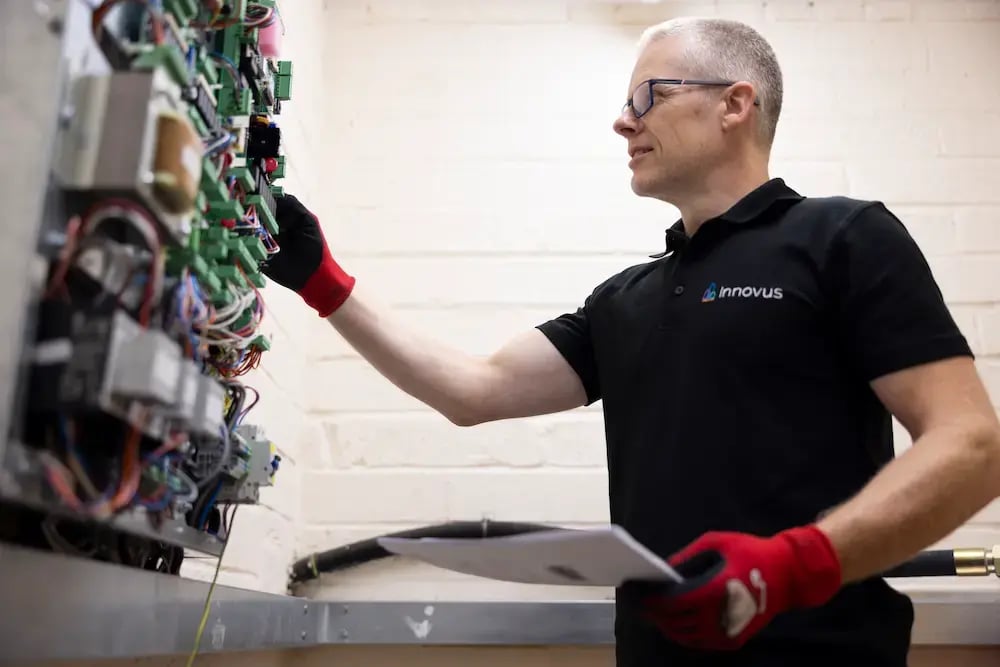
electrician working on control panel

The Cost of Delay: Why Acting Now Is Critical

With the final national withdrawal scheduled for January 2027, 2026 is effectively the last full year to identify, assess and transition affected systems. But many organisations are still in the early stages of understanding their exposure.

Organisations that delay will find themselves:

  • Reacting to failure under pressure rather than planning delivery.
  • Facing limited availability from suitable providers and increasing costs.
  • Making rushed decisions that increase disruption to residents.
  • Discovering risk only when systems fail during an actual emergency.
  • Identify higher-risk schemes and prioritise accordingly.
  • Spread delivery over time to manage cost and disruption.
  • Retain governance and control over the transition.
  • Protect residents and demonstrate due diligence.

Organisations that act early can:

  • Identify higher-risk schemes and prioritise accordingly.
  • Spread delivery over time to manage cost and disruption.
  • Retain governance and control over the transition.
  • Protect residents and demonstrate due diligence.

Lady Wearing Emergency Call Button

FREE GUIDE | INNOVUS

Download Your Free Guide

Get your copy of "Are Your Residents at Risk? - Analogue Phone Line Withdrawal: A Practical Guide for Managing Risk Across Emergency Call Systems and Lift Communications".

Independent Delivery and Assurance for the Analogue-to-Digital Transition

Innovus acts as an independent partner, coordinating assessment and planning across Emergency Call Systems and lift emergency communications to help organisations manage the transition in a controlled, proportionate way.

Portfolio & Risk Assessment

We identify analogue-dependent systems across your entire portfolio, then triage buildings by resident dependency, system type and consequence of failure, ensuring effort is focused where it matters most.

Specification Writing

We prepare technical specifications against a clear, consistent scope, ensuring suppliers are tendering on a like-for-like basis with no ambiguity over what is being delivered.

Supplier Coordination

We coordinate delivery across multiple suppliers and systems, providing a single point of accountability with clear ownership and timelines.

Section 20 Consultation

Where required, we manage the Section 20 consultation process on your behalf, maintaining statutory compliance and avoiding delays to the wider programme.

Ongoing Oversight

From initial assessment through to completion and sign-off, we provide continued assurance at every stage so nothing is missed, risks are flagged early and delivery stays on track.

Resident Communication

We support you in keeping residents informed throughout the transition with clear, timely communication, maintaining confidence, managing expectations and minimising disruption to daily life.

Accreditations & Recognition

Recognised for excellence and regulated by the industry's leading bodies.

We Won at the Inspiring Women in Property Awards 2025!
TPI_Partner_RGB
The Property Ombudsman Accreditation
Regulated by the Royal Institute of Chartered Surveyors
Innovus ISO Accreditation

About Innovus

Innovus delivers market-leading solutions and expertise to the UK’s property sector, with over 25 years of experience supporting residential property professionals. We are RICS-regulated and backed by Emeria, the world’s leading provider of real estate services and technologies.

Our services span Building Safety and Compliance, Surveying, Business Services and Asset Management. We manage over £320 million in assets and are trusted by FTSE100 companies, institutional investors, managing agents and housing providers.


Innovus Meeting with Branding

Frequently Asked Questions About the Analogue to Digital Switchover

What is the PSTN switch-off and when is it happening?

The PSTN (Public Switched Telephone Network) switch-off is the retirement of the UK’s traditional analogue phone network, being replaced by digital voice services delivered over broadband. The final national withdrawal is scheduled for January 2027, but services are already being withdrawn in phases across the country. There is no single published schedule, meaning buildings can be affected at any time.

Which building systems are affected by the analogue switchover?

The systems most affected are Emergency Call Systems (including warden call systems, pull cords, pendant alarms and communal emergency phones) and lift emergency phones. Any system that relies on an analogue phone line to connect to a monitoring centre or emergency responder is at risk of failure as the network is withdrawn.

How do I know if my buildings are at risk?

If your portfolio includes retirement or supported living schemes, if Emergency Call Systems were installed more than five to ten years ago, if lift emergency phones use fixed landlines, or if there is no single register of system connectivity — analogue dependency should be assumed until confirmed otherwise.

Who is responsible for upgrading these systems?

Responsibility sits with the organisation in control of the building and its assets. For lift emergency phones, this is typically the lift owner or duty holder. For Emergency Call Systems, it’s usually the housing provider or building owner. While delivery can be delegated, accountability cannot be transferred.

What happens if we don’t act before the switchover?

Systems that still rely on analogue connectivity may continue to appear operational but become increasingly unreliable, or fail altogether without warning. In the worst case, residents are unable to raise an alarm or connect to a responder when they need help. Organisations also face regulatory, reputational and operational consequences.

Can Innovus manage the transition for us?

Yes. Innovus acts as an independent delivery and assurance partner, coordinating assessment, planning and delivery across Emergency Call Systems and lift emergency communications. We provide portfolio-level visibility, structured programme management and ongoing oversight — so your team retains confidence and control without managing day-to-day complexity.

How long does the transition take?

Timelines vary depending on portfolio size, system types and building complexity. A structured approach typically begins with a portfolio-level assessment to identify exposure, followed by phased delivery prioritised by risk. Starting early gives organisations the most flexibility over timing and cost.

What does it cost?

Costs depend on the scale and complexity of your portfolio. An initial conversation with our team can help define the scope of work required and provide indicative costs. We are transparent in our pricing and secure multiple independent quotes where supplier work is needed.